
Step beyond the ordinary. These aren't guided tours — they're invitations into homes, communities, and centuries-old traditions. You'll leave changed.
From the rhythmic heartbeats of Acholi drums to the warm smiles of village elders sharing stories by firelight, every experience is designed to touch your soul.
Too often, cultural tourism means standing behind a rope, watching people perform their traditions for your entertainment. That's not what we do.
Our cultural tours are built on genuine connection. When you visit an Acholi village, you're not a tourist — you're a guest. You'll sit with elders who'll share stories passed down through generations. You'll eat meals prepared with love in homes that have welcomed strangers for centuries.
Our guides aren't interpreters — they're community members, craftspeople, dancers, and farmers who open their world to you because they want to, not because it's their job. Every experience is a two-way exchange of humanity.
"When you come to our village, you don't leave as a stranger. You leave as family."
— Traditional Acholi welcome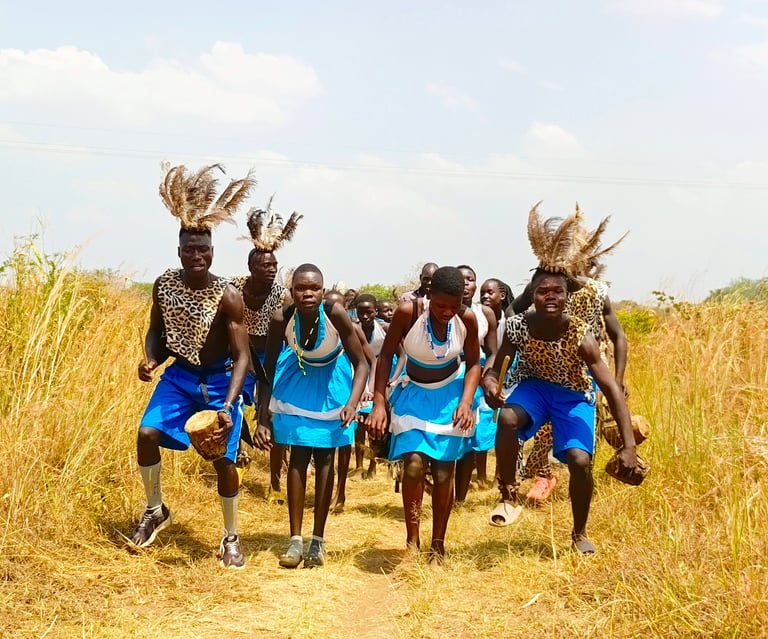
Each tour is carefully crafted to create meaningful connections between you and the people, places, and traditions that make Uganda extraordinary.

Begin your day in Gulu City, where your local guide — someone who grew up in these traditions — will welcome you like family. Visit a traditional homestead, learn about daily life, and share a meal with an Acholi family. Witness a performance of Bwola or Larakaraka dance, participate in a craft workshop, and end the day with stories around a fire.
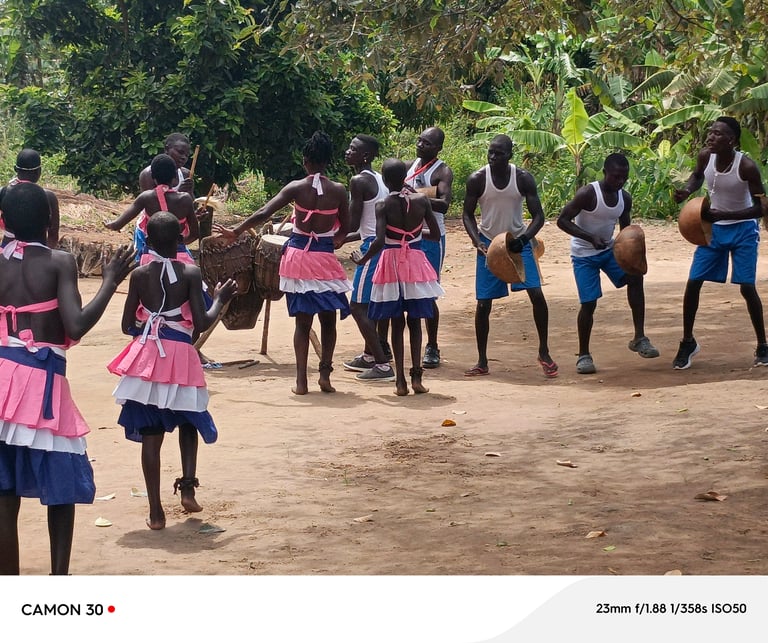
In Ugandan culture, ceremonies aren't events — they're living expressions of identity, spirituality, and community. From initiation rites to harvest celebrations, each ceremony carries profound meaning passed down through countless generations.
Performed for royalty, Bwola is the most prestigious Acholi dance. Men and women face each other in two lines, swaying to hypnotic drum rhythms while embodying the grace of elephants. Seeing it performed for you — by people who've practiced since childhood — is humbling.
Young women perform this graceful dance to attract potential husbands, mimicking the movements of a bird building its nest. It's playful yet deeply symbolic — a celebration of love, fertility, and the beginning of new families.
When young Acholi reach adulthood, they undergo rites of passage that connect them to their ancestors and community. These ceremonies, rarely witnessed by outsiders, are profound expressions of identity and belonging.
Traditional spiritual ceremonies aimed at healing individuals and communities. Led by spirit mediums (Awaka), these gatherings involve drumming, dancing, and spirit possession — a powerful glimpse into traditional spirituality.
Cultural sensitivity note: Some ceremonies are sacred and not performed for tourists. We only arrange experiences that community members are genuinely comfortable sharing. This ensures authenticity and respect.
In a world of mass production, these crafts represent something rare: objects made by hand, with purpose, and a story behind every stitch.
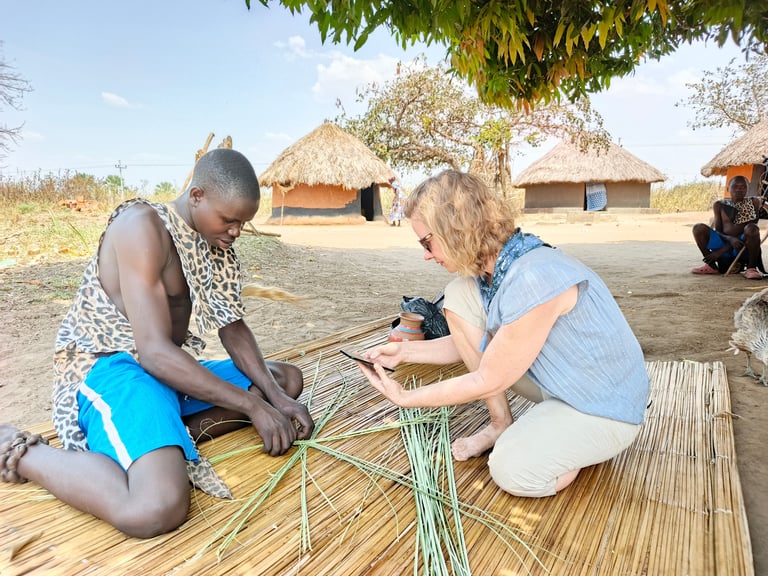
Our craft workshops aren't just about making souvenirs — they're about understanding the skill, patience, and meaning behind each object. Under the guidance of local craftspeople, you'll learn techniques that have remained unchanged for centuries.
Acholi women have woven baskets for storage, dowries, and ceremonies for generations. Learn to create your own using local grasses and traditional patterns.
Beads carry deep cultural significance in Acholi tradition, worn during ceremonies and used to communicate status. Create your own traditional jewelry.
Traditional pottery is both art and utility. Learn to shape clay into functional pieces using techniques passed from grandmother to grandchild.
Every craft you create, every item you purchase — it comes with a story. Who made it, how they learned, what it means. These aren't just objects. They're connections.
Shop or Create Your Own